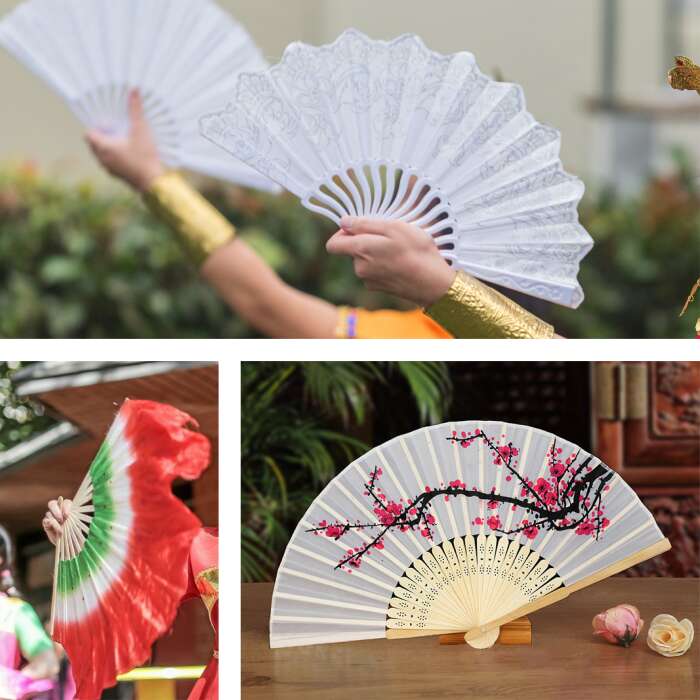
Quạt Tay, traditional Vietnamese fans, are one of the most graceful and poetic symbols of Vietnamese culture. Present for centuries in everyday life and the arts, fans transcend their practical function to become true expressions of identity, elegance, and craftsmanship.
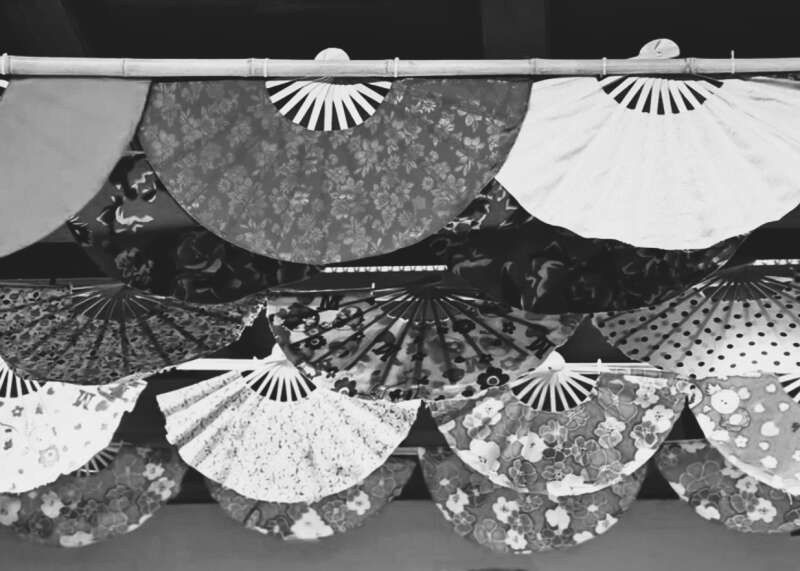
Handmade by local artisans, Quạt Tay combine bamboo, wood, paper, or silk - natural materials that reflect the harmony between man and nature. Their delicate structures, often hand-painted with floral motifs, rural scenes, or geometric patterns, are testimonies to a craftsmanship passed down from generation to generation.
Historically, fans have played multiple roles in Vietnamese society. They were used to cool the body on hot and humid days, but also as a means of communication and a social symbol. In imperial courts, fans were a sign of status and refinement; in villages, they were a constant presence in traditional dances and celebrations.
The folding fan emerged as a practical evolution, allowing it to be carried and used with discreet gestures - an extension of the body and temperament of the person holding it. The fixed fan (quạt nan), on the other hand, remained open, often used in dance and theater performances, where the movements of the fan represented emotions and moods.
More than just an object, the Quạt Tay became a symbol of delicacy, balance, and grace. In the hands of a dancer, it is an extension of the soul; in everyday life, a reflection of Vietnamese aesthetics - simple, functional, and deeply beautiful.
Today, the fan remains present in both cultural traditions and contemporary design, evoking the same ancestral gesture of elegance: opening the air, shaping movement, and celebrating the silence between each breath of wind.